
AI
Designing AI Features People Actually Trust
Most AI features fail on trust, not intelligence. Notes on streaming, reversibility and showing your work.
6 min read
Abdullah A.A.Full-Stack Developer
Full-Stack Developer, Product Builder, and software engineer focused on building scalable, useful, and beautifully engineered digital products.
I bridge the gap between complex software engineering and high-impact UI/UX. Here is how I deliver immediate strategic value to every codebase.
Crafting modular, type-safe full-stack architectures engineered for high performance, ease of maintenance, and effortless scale.
Seamlessly embedding intelligent LLM capabilities, real-time streaming, and robust backend microservices into intuitive digital products.
Combining fluid 60fps micro-interactions, dark/light theme perfection, and uncompromising accessibility for a world-class user experience.
End-to-end product engineering from database schema to polished interface — systems that stay coherent as they grow.
Fast, accessible web apps with intentional UX. Routing, state, performance and design systems treated as one problem.
Native-feeling mobile products with real editor work, gesture systems and the awkward realities of small screens handled.
APIs designed for clarity and scale — clean contracts, reliable queues, and data models that outlive feature churn.
Design-minded implementation: motion that communicates, whitespace that breathes, and interfaces that feel crafted.
Practical AI engineered into products — streaming, tool-use, evals and guardrails, not a chatbot bolted on the side.
A few things I've designed, built and shipped — from ideation to production.
Developer Tools · 2024 — Now
Role
Founder & Lead Engineer
Duration
Ongoing · since 2024
Team
4 people
Status
In Development
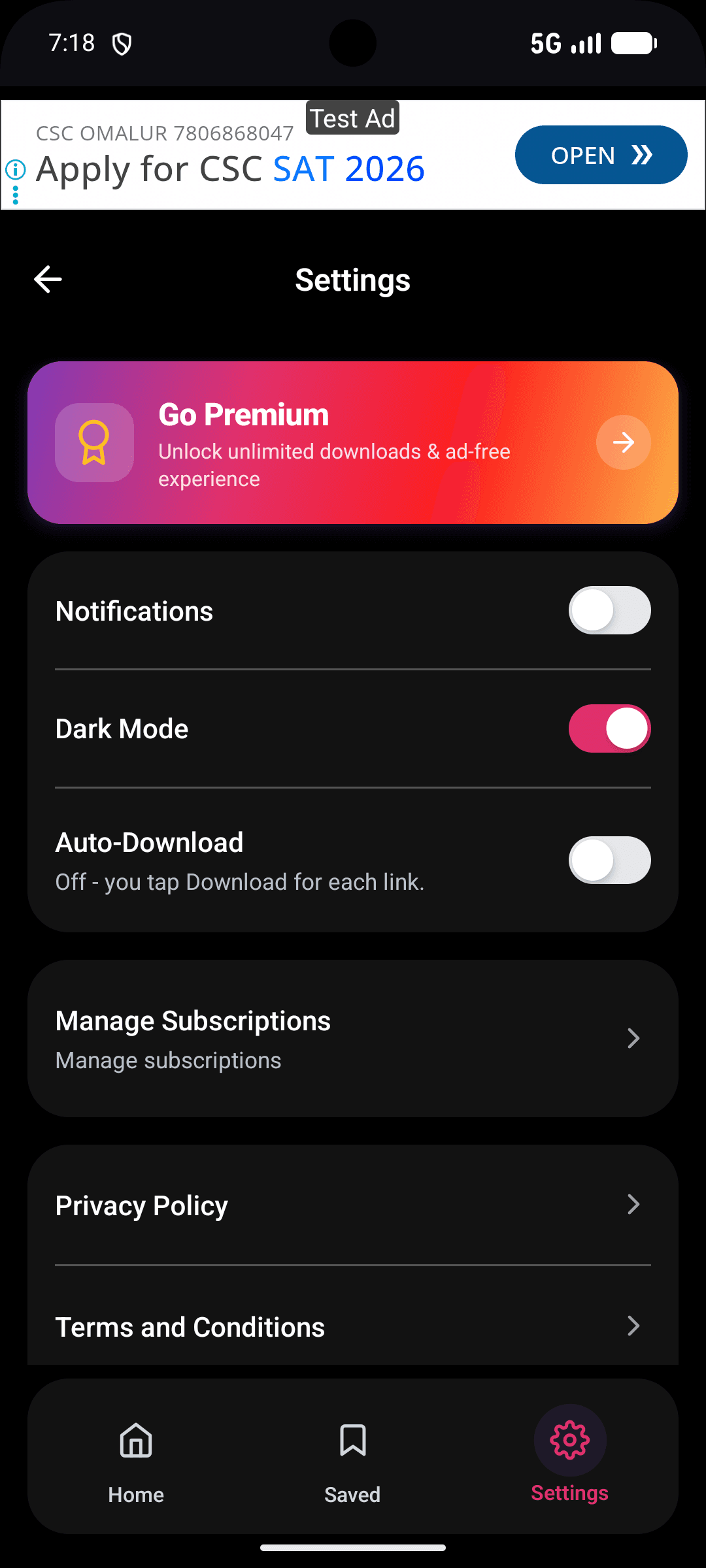
Mobile developers were underserved: existing options were either glorified textareas or thin clients dependent on a server. I designed ReCode to sit in between — a native-feeling editor with repo-aware AI, a lightweight sync layer and enough terminal to unblock real work.
The core challenge was trust: early builds applied AI completions silently and users switched it off within a day. The rebuild made the AI propose and the human apply — a small product decision that changed the whole adoption curve.
Challenge
Keyboard-driven editing on a phone, memory ceilings and AI latency all fight the user.
Outcome
Private beta with a working AI pair-programmer on mobile — same model, better contract.
Explore Case StudyA pragmatic, boring-where-it-should-be stack. Every tool earns its place by shipping real products.
Interfaces that feel fast, precise and alive.
React
Daily driver for product UIs — hooks, suspense, design systems.
· in use since 2020
Next.jsNext.js
App Router, RSC and edge rendering — my default for web products.
· in use since 2021
TypeScriptTypeScript
Strict mode everywhere. Types are the first test suite.
· in use since 2020
Tailwind CSSTailwind CSS
Design tokens in code — consistent rhythm without CSS drift.
· in use since 2021
TanStack QueryTanStack Query
Server state management and caching made easy.
· in use since 2022
ZustandZustand
Minimal, fast, and scalable global state management.
· in use since 2022
Tools for crafting beautiful and accessible experiences.
Figma
Collaborative interface design and prototyping.
· in use since 2021
Shadcn UIShadcn UI
Beautifully designed, accessible components.
· in use since 2023
Framer MotionFramer Motion
Declarative animations that feel incredibly fluid.
· in use since 2022
Material-UIMaterial-UI
Robust React components for enterprise applications.
· in use since 2021
BootstrapBootstrap
Quick grids and responsive layouts for older projects.
· in use since 2019
Native-feeling apps built with web technologies.
React Native
Cross-platform mobile apps with a single codebase.
· in use since 2022
ExpoExpo
The fastest way to build and ship React Native apps.
· in use since 2022
APIs and services designed for clarity and scale.
Node.js
Event-driven services, CLIs and realtime servers.
· in use since 2020
NestJSNestJS
Progressive framework for building efficient, scalable APIs.
· in use since 2021
ExpressExpress
Lean REST APIs and middleware pipelines.
· in use since 2020
PythonPython
Scripting, data plumbing and AI service glue.
· in use since 2021
FastAPIFastAPI
Typed async APIs for AI inference services.
· in use since 2023
FFmpegFFmpeg
Complete, cross-platform solution to record, convert and stream audio and video.
· in use since 2022
Data models that outlive feature churn.
PostgreSQL
First choice for relational data — plus pgvector for search.
· in use since 2021
MySQLMySQL
Reliable relational database for traditional web apps.
· in use since 2019
MongoDBMongoDB
Flexible documents where the shape genuinely varies.
· in use since 2020
RedisRedis
In-memory data store for caching and queues.
· in use since 2021
PrismaPrisma
Next-generation Node.js and TypeScript ORM.
· in use since 2022
Drizzle ORMDrizzle ORM
Headless TypeScript ORM that is fast and lightweight.
· in use since 2023
SupabaseSupabase
Auth, storage, realtime and Postgres without the ops tax.
· in use since 2022
FirebaseFirebase
Realtime databases and fast setup for prototypes.
· in use since 2021
Ship small, ship often, sleep well.
AWS
Comprehensive cloud services for scaling applications.
· in use since 2021
AzureAzure
Enterprise-grade cloud infrastructure and services.
· in use since 2022
Digital OceanDigital Ocean
Simple, developer-friendly cloud hosting.
· in use since 2020
DockerDocker
Reproducible environments from laptop to production.
· in use since 2021
JenkinsJenkins
Open source automation server for CI/CD.
· in use since 2021
GitHubGitHub
Actions, reviews and automation as team habits.
· in use since 2020
VercelVercel
Preview deploys that make feedback loops instant.
· in use since 2021
NetlifyNetlify
Web development platform for productivity.
· in use since 2020
NginxNginx
Reverse proxy, TLS and caching on self-managed boxes.
· in use since 2022
Essential APIs and utilities that accelerate development.
Stripe
Payments infrastructure for the internet.
· in use since 2021
PayPalPayPal
Global digital payments platform.
· in use since 2020
CloudinaryCloudinary
Image and video API for fast media management.
· in use since 2022
PostmanPostman
API platform for building and using APIs.
· in use since 2020
Practical intelligence, engineered into products.
OpenAI APIs
Streaming completions, embeddings and tool use in production.
· in use since 2023
OllamaOllama
Local model runtimes for private, offline AI features.
· in use since 2024
MLXMLX
On-device inference experiments on Apple silicon.
· in use since 2024
AI AgentsAI Agents
Tool-using assistants with guardrails, evals and memory.
· in use since 2024
Projects built & shipped
Happy clients & collaborators
Years of experience
Technologies in daily use
A path from first client projects to leading a product studio — learning what actually moves the needle at each stage.
2024
Building an independent product studio focused on AI-powered developer tools — including ReCode IDE, an AI-assisted code editor designed for mobile developers.
2023
Technical lead for a product studio — owning architecture, delivery quality and engineering culture across client engagements.
2022
Led a small product team building web platforms for regional businesses — from scoping through deployment and support.
2021
Worked directly with founders and small teams to design, build and ship web and mobile products end-to-end.
A repeatable rhythm that keeps ambiguity low and quality high — the same process behind every project here.
Understand the problem, the user and the constraints before any code. Ask the questions that change the plan.
Map the architecture, scope the first release and define what 'done' means — ruthlessly minimal.
Shape the interface and interaction model — a clear experience is a specification in itself.
Ship in small vertical slices, keep the system boring where it should be and preview everything early.
Measure, listen and polish. Performance and feel are features, and they ship last on purpose.
I don't build software just to make something work. I build it to make the experience feel effortless.
01
Design for the load you'll plausibly have, not the peak you imagine. The right architecture makes tomorrow's growth boring.
02
Code is read a hundred times more than it's written. Clarity and documented decisions compound into fewer expensive rewrites.
03
Every interaction is a promise. If a flow feels confusing, that's a spec bug — not a user failure.
04
Speed isn't a launch task; it's a habit with a number attached. I keep budgets and re-check them on every release.
05
Keep the core decoupled from the tools. When the framework or cloud changes, the product logic shouldn't have to.
06
The best system design starts from what users feel, not what the code looks like. A feature nobody understands is a liability.
Real feedback from founders and teams I've built with. Names are placeholders until attributed.
The problems I'm actively working on and learning about — the ideas I'd spend the next few months on.
Things I've learned shipping real products — written down so they don't have to be learned twice.
Most AI features fail on trust, not intelligence. Notes on streaming, reversibility and showing your work.
6 min read
Exotic stacks win demos; boring stacks win years. What I choose by default and why.
5 min read
Keyboards, memory ceilings, gesture conflicts — an honest list of what it took to make typing code on a phone feel right.
8 min read
Have an idea, product, or technical challenge? Let's turn it into something people actually enjoy using.